Communicating > Philanthropic impact
I’ve had the rare opportunity to see philanthropy in Australia from the inside — a sector still young, still evolving, and still growing in vision.
In 2013, I became the launch editor of Generosity, Australia’s first publication created for philanthropists and impact investors. The magazine arrived at a moment of growth, and was embraced by a sector eager to reflect on its purpose and potential. Some years later, that perspective led to a commission from US foundation The Atlantic Philanthropies to write a book examining the impact of more than $500 million in giving to Australian health and biomedical advances.
In the times between I’ve collaborated with a raft of for-purpose organisations and initiatives, including the Centre for Social Impact, the Australian Environmental Grantmakers Network, The Funding Network, and The Nexus Australian Youth Summit on Innovative Philanthropy and Social Entrepreneurship.
The story. The lessons.
Atlantic Philanthropies in Australia
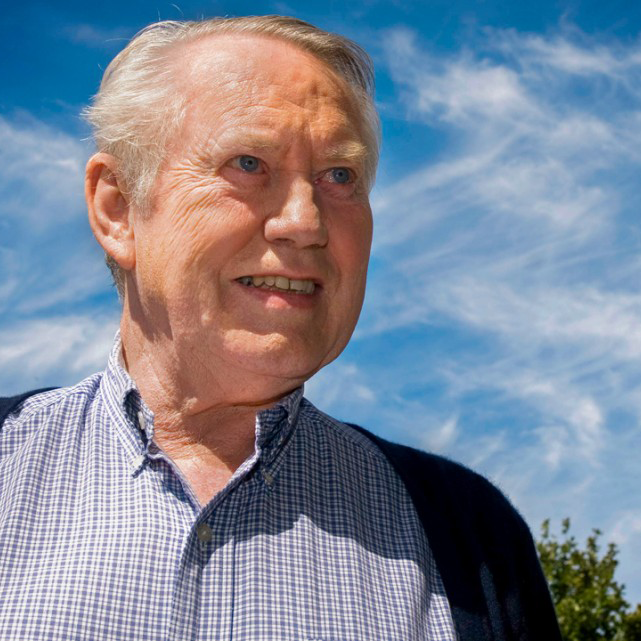
Between 1998 and 2016, American billionaire Chuck Feeney and his foundation, The Atlantic Philanthropies, gave A$549 million in grants to grow Australia’s biomedical research, higher education, social equity, and leadership capabilities.
The gifts reached 23 organisations across Queensland, Victoria, New South Wales and Tasmania, and co-funded the creation of eight new research institutes. They leveraged more than A$2 billion in matched giving from state and federal governments and other donors. They helped raise Australia to its international science and innovation standing, expanded the reach of health services to thousands of people, constructed 26 new facilities in four states, and built capacity in leadership and philanthropy so that Australia might take better advantage of its own endemic gifts and thrive into its future.
Why Australia?
Feeney had no family connection to Australia, and the country featured only minimally in his Duty Free Shoppers empire. The reason for Atlantic’s interest in Australia — gratifyingly — was Australians themselves.
The connections that he made with Australians, and the unfulfilled potential he saw through them, are at the heart of his motivation for driving Atlantic’s investments in Australia. The unique chemistry of a down-to-earth, no-frills culture, many years of friendship that the Feeneys found in their Queensland community, discovery of bold leaders with big dreams, and governments at state and federal levels amenable to co-funding, earned us an unexpected friend.
The 60:40 rule
How to be proactive with your post-disaster dollar.

Aussies pride themselves on being generous givers in times of emergency and disaster, responding to both international and domestic events with sometimes impassioned empathy. But are we getting our giving right?
“Nothing is surer in Aussie life than death, taxes, and disasters,” says Dr. Wendy Scaife, Senior Research Fellow Australian Centre for Philanthropy and Nonprofit Studies.
“The outpouring of compassion and generosity that follows our crisis events is wonderful and needed – but it is also too short-lived and ad hoc. I look forward to a community that gives not just at the immediate time of the disaster but ongoing, as needs change and grow — long after the embers die down, or the cyclone abates.”
The need for philanthropic funding at secondary, longer-term stages of disaster recovery is well recognised but under-served, says a 2012 Disaster Giving - A natural response report by JBWere. Funds, in-kind donations, and economy-building support in the mid- and long-term phases of disaster recovery are vital to restoring the sustainable health of damaged communities and environments.
Structured philanthropy – significant giving through private ancillary funds (PAFs), trusts, foundations, and the corporate sector – is well placed to answer this need for strategic, long-term support, Scaife says.
“Our tip is to commit 40 per cent of your funding to immediate emergency assistance and response, and 60 per cent to medium- and long-term recovery,” says Alex Gartmann, CEO of the Foundation For Rural and Regional Renewal (FRRR), and a champion for the needs of disaster-affected communities.
Full recovery can take up to 10 years, Gartmann says, and less visible needs – non-infrastructure areas such as mental health, business mentoring, economic stimulation, and tourism – can fall into the funding gap that opens up after media and government attention has moved onto other calls for emergency relief.
“It’s critical that philanthropists realise that recovery is a marathon, not a sprint,” she says.
Collective impact
More bang for your philanthropic buck
Impact investors are often in the business of tackling complex, entrenched social problems: reducing homelessness; improving Indigenous health outcomes; battling abuse and neglect of children.
Working with external stakeholders on these complex challenges is rarely optional, but how collaborators engage in their work together is. Pooling resources with other private and corporate funders, bringing nonprofits together to achieve common goals, and rallying the support of interest groups are increasingly common agenda items for philanthropists, and for the most part, collaborations and joint projects are evolving organically or according to existing structures for collaborative effort.
The ‘Collective Impact’ idea – a methodology for achieving success in the face of complexity – is a framework that raises the bar on business-as-usual collaborative methods and relationships. It recognises that for all the positive intent often involved, successful collaboration is rarely easy.
Love and marriage
“Like in a marriage, when we first come together to collaborate with others, we’re drawn by the romance and the high hopes we have for the future,” said Social Leadership Australia’s Liz Skelton at the recent inaugural and sold-out Sydney Collective Impact 2014 conference, presented by the Centre for Social Impact and Social Leadership Australia.
“But inevitably, when the first flushes of love are dwindling, and the dirty socks and towels on the floor become evident, we have to find a new way of keeping the relationship going. We need the skills to move forward.”
Among the more than 200 philanthropy, nonprofit, government, and community professionals and thinkers in attendance at the recent conference, many had stories to tell of collaborative efforts gone awry, of stalemates met, and of breakdowns in project momentum due to lack of trust and misaligned expectations. The hunger for guidance towards engineered collaboration was palpable.
Drinking the Collective Kool-Aid
“Sure, there’s a lot of drinking the Collective Impact Kool-Aid,” said one participant of the current fervour for the Framework, “but the truth is that having a system for collaboration is just smarter than going in without one. That’s why these people are all here. They don’t want to waste any more time and effort – or money.”