Communicating > Arts + creativity
“I’m afraid it’s too late for you,” author Robert Kroetsch once told me. “You’re an artist. You can’t go back. It’s like getting pregnant: Oops! Art is gestating.”
I still disagree with the old man about myself, but after four roles in communications and festival coordination at Canada’s leading creativity-incubator, The Banff Centre, I understand what he meant about art. I’ve written about jazz, dance, spoken word, theatre, literature, film, even puppetry. Through Generosity, an online philanthropy magazine I helped launch, I’ve also met many of Australia’s leading arts organisations and arts funders. In the end, art is just a bodily function, a human impulse. Kroetsch knew that.
Gene Sherman
“Tikkun olam — mend the world”
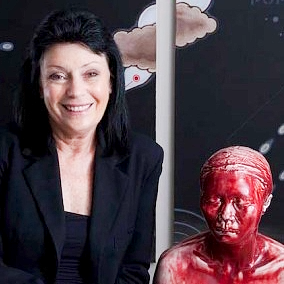
Within minutes of meeting Dr Gene Sherman – philanthropist, academic, chairman and executive director of the Sherman Contemporary Art Foundation (SCAF) – it becomes clear why she wears so much black.
Sherman herself would explain her monochromatic aesthetic as idiosyncratic, influenced by pioneers of Japanese fashion, an intellectual and emotional expression of form. But listening to her South African lilt over tea in the sunlit SCAF garden, I think her blackness is about warmth — the retaining of it, the effusing of it, the spilling of it onto guests, gallery staff, family, the workmen who have arrived to install a new artwork in the garden. Like heat off bitumen.
A Member of the Order of Australia, grandmother of six, a ‘Chevalier de l’Ordre des Arts et des Lettres’ (one of France’s highest honours, also bestowed on T.S Eliot and Seamus Heaney), and matriarch of one of Australia’s most esteemed and accomplished Jewish families, Sherman’s seemingly blessed life has not been without its darkness.
A child of Apartheid South Africa, her blossoming years were coloured with the unpredictable fortunes of her brilliant but ill-fated financier father, the suicide of her mother Micky, the loss of her brother Peter, and the later stillbirth of her first child with husband Brian, who she had met at a tennis match and wed 12 weeks later.
When Gene and Brian arrived in Sydney in 1976, carrying two young children and a total of $5200, it was to build anew. “We felt empowered to make a wonderful life. We just wanted to get on with it.”
Indie bandits
Cool kids on campus
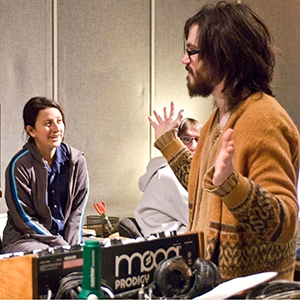
Morning coffee queue at The Banff Centre’s Maclab Bistro, and the line-up consists of the usual suspects: a poet with a post-yoga glow, a sculptor in a postparty funk, and a conference suit with a pre-caffeine twitch.
At the front of the line, two girls in knee-high boots, sequinned silver skirts, and massive, winged fur coats wait for their skim lattes. I sneak a glance at the taller one – her brown hair teased into an electrified madness, one glittering oversized eyelash peeling away from her face. The girls/women/amazons look as though they have fought the wilds for this coffee. Small pieces of bracken fall from their hair onto the floor.
“Music video,” one of the she-beasts says with a tired smile in response to my staring. “Indie Band,” she adds. It all becomes clear. The cool kids.
I am about to slink away with my herbal tea to my way uncool day job when the king of the cool kids shuffles in. With long, dishevelled hair, an old-man cardigan, and the kind of loafers Jesus would wear if he was a drummer/producer/audio-engineer wunderkind, “Hey”, Shawn Everett says to me, just like he says hey to Bob Dylan, or Eddie Vedder in his real life. “Hey Shawn”, I say back so that the musicvideoettes can hear. For a brief moment, I too, rock.
The Banff Indie Band Residency, a two-week program for indie rock groups is in its third session, and the energy it is putting out is far from acoustic. An intensive writing, recording, and performance program in which three up-and-coming groups are given access to the kinds of resources for which most musicians wait a lifetime, the program is one big amplified band camp. Three bands, Winnipeg’s Mise en Scene, Vancouver’s Abramson Singers, and the Doldrums from Toronto/Montreal, have been chosen to board the Banff Indie Band train.
A Kroetschian affair
“I have no off switch for my brain”
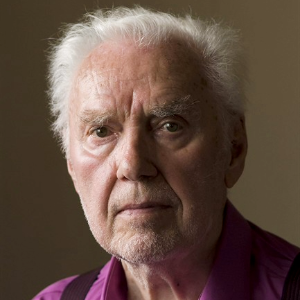
Not so long ago, on a wet May day, I had a date with Robert Kroetsch.
I was a little nervous as I drove to Leduc, Alberta to interview the ‘Father of Canadian Literary Postmodernism’. I didn’t know much about postmodern prose, magical realism, or the development of the ‘Canadian long poem’, but in the end, it didn’t matter. Like so many who met him, I had a Kroetschian experience – surprising, inspiring.
I had expected to meet the 83-year-old in his retirement village home, but instead Kroetsch handed me his cane at the door, climbed into my car and instructed me to drive away. “I’m taking you to lunch!” he said. We drove for half an hour through yellow fields glazed with rain, in search of his favourite dessert. “I come here just for this you know,” he told the waitress when we ordered.
After the loss of his mother, Kroetsch’s motherland of Alberta became his muse. “I spent many years travelling the world,” he liked to say, “but I never left Alberta.” By the time he was 83 and pouring my tea, Robert Kroetsch had received more literary awards than he could poke his cane at. He had written 14 books of poetry, seven non-fiction books, and nine works of fiction, not including the novella he sent to his agent the day before we met.
“I had the idea for it in 1965!” he proclaimed, wielding his spoon.